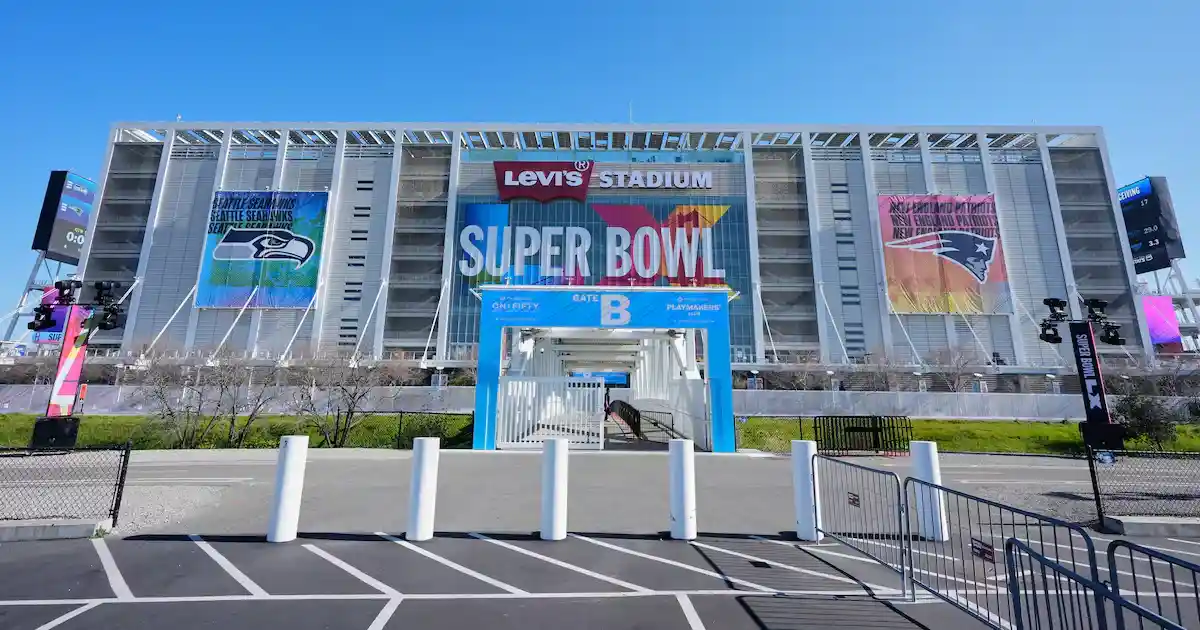
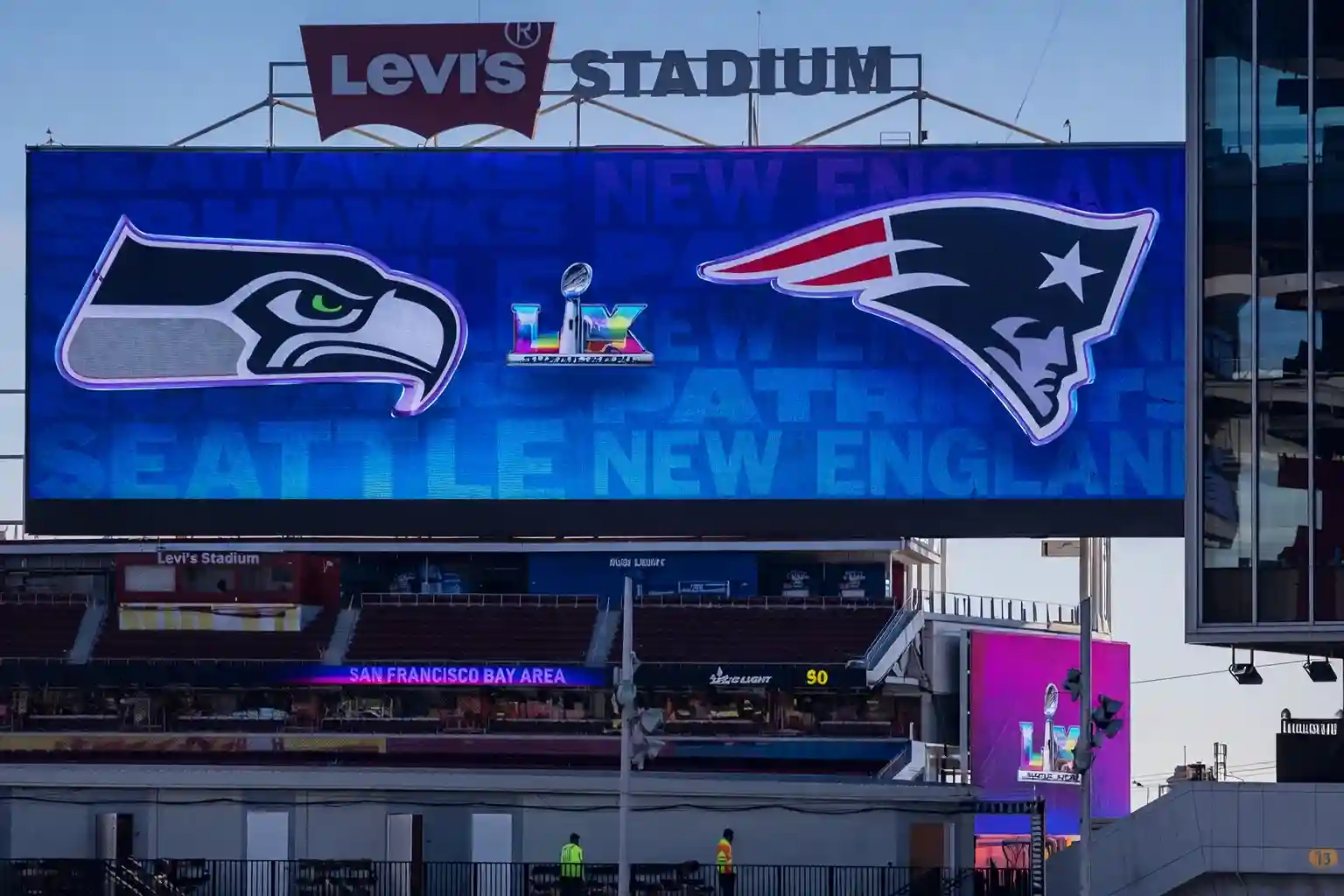
A lot is going on behind the scenes at Levi's Stadium in Santa Clara, California, as the excitement grows for Super Bowl LX this Sunday, when the New England Patriots will play the Seattle Seahawks. It's not just the players getting ready or the supporters getting their tickets ready; the people in charge have been working hard to improve the technology so that everything goes off without a hitch. We're talking about a lot of new cables, a lot of Wi-Fi hotspots, and some strong defenses against hackers who could try to ruin the fun. And this year, they're keeping an extra close look out for attacks that use AI, which is becoming a greater problem than anyone thought it would be.
Turning Levi's Stadium into a Digital Fortress
Let me show you what I mean. The National Football League and the San Francisco 49ers, who play at Levi's Stadium, have converted the place into a sort of fortress. They put in all this fiber optic wiring to handle the huge amount of data, added hundreds of wireless points so people can stay connected without any problems, and turned up their cyber barriers to keep out unwelcome visitors. You know a major storm might come, so you board up the windows and fill the pantry. To keep game day free of any bad surprises, the NFL has put together a special team solely for cybersecurity. It's like a SWAT team for the digital world.
The Cyber Command Center and Pickpocket Analogy
They've built up this temporary command station down in the lower levels of the stadium to keep an eye on everything online. It's where the specialists sit and keep an eye out for problems so they can step in and correct them before they get out of hand. George Griesler, the NFL's senior director in charge of cybersecurity, presented it in a way that really hit home. He said these cyber criminals are like pickpockets on a busy street; they see a major event like the Super Bowl as the perfect chance to slip in and cause trouble without anyone noticing right away. You have to respect how these men plan ahead. They don't just deal with problems as they happen; they see them coming before they happen.
Why AI Is the New Big Worry This Year
This time, what's really getting people's attention is how AI is slipping in as a possible weapon for bad people. Costa Kladianos, the 49ers' executive vice president and head of technology, said that AI wasn't seen as a big issue even a year ago. But my, things have changed quickly. Hackers can use AI to automate assaults, which makes them faster, sneakier, and harder to detect. AI gets smarter every day. Think about a program that learns from past breaches and changes on the go. That's the kind of horror they're getting ready for. It's not a story anymore; it's real, and the NFL isn't taking any chances. They've stepped up their surveillance to catch these AI-driven initiatives, whether it's someone trying to interfere with the scoreboards, steal fan data, or disrupt the broadcasts. Kladianos said that their defenses are now set up to search for patterns that look like AI interference, such as strange spikes in traffic or strange code behaviors that a human hacker might not be able to pull off as easily.
Handling the Massive Fan Data Tsunami
Changing gears a bit, one of the main problems with any huge event these days is making sure everyone stays in touch. With about 65,000 people in the stands for the Super Bowl, each one possibly using a phone, a tablet, and maybe even a wristwatch, the data needs are off the charts. There are countless selfies, live videos, and social media updates. It's a data tsunami. The 49ers' tech team thinks that more than 35 gigabytes will be uploaded throughout the game. That's like watching thousands of movies at once! To deal with that, they've gone all out on the Wi-Fi arrangement, trying to make it feel as cozy and reliable as relaxing on your own couch at home with your own network.
Wi-Fi 7 Upgrade: Like Adding Lanes to a Highway
When he talked to reporters, Matt Swartz, a well-known engineer at Cisco, summed it very well. He said, "We're in Silicon Valley, so everyone has one, two, or maybe three devices." That's really true! Cisco came in and put in approximately 1,500 of these new wireless routers that work with the Wi-Fi 7 standard. Wi-Fi 7 is the newest and best version. It offers faster speeds, better management of crowds, and fewer dropouts. Swartz said it was like making a freeway wider during rush hour. You add more lanes, and all of a sudden, everything moves more smoothly. No more annoying delays when you want to post that amazing touchdown replay or see the halftime show lineup. It's all about keeping the audience pleased and interested. After all, a terrible connection may ruin a wonderful game.
The Role of New Data Centers and Stadium Upgrades
But it's not just about the wireless things. The data infrastructure is what makes all of this possible, and Santa Clara has an advantage there because it's a popular region for developing data centers. Cheap power makes it a good place for tech-heavy businesses. The 49ers own and operate three of these places: one at their training fields and two at the stadium. The most recent one was part of a $200 million renovation of Levi's Stadium that was finished last year. That renovation featured this huge 4K video board, which is the biggest in the NFL. There are also a lot of smaller screens around the stadium so that everyone can see what's going on, no matter where they are.
These displays aren't just for show; they need a lot of computational power to work properly. The new data center is like the engine room of a ship. It powers all the lights, sounds, and images, and it even connects to the security cameras. You'd have problems that may ruin the mood without it. And speaking of cyber, these data centers are great places for hackers to exploit, especially when AI is involved. Hackers might try to overload them or sneak in spyware that messes up the streams. The NFL's cyber squad is built in into this system, and they use cutting-edge techniques to look for weaknesses 24 hours a day, seven days a week.
How Sports Events Are Becoming Tech Hubs
In a bigger sense, everything going on during Super Bowl LX provides a glimpse of how sporting events are changing in our hyper-connected world. In the past, all a stadium needed was excellent seats and a hot dog stand. Now it's a little tech hub that mixes entertainment with cutting-edge infrastructure. This isn't just happening in the NFL; other leagues across the world are having the same problems. The World Cup and the Olympics are two examples of events that have had to step up their game to deal with cyber dangers. But with AI getting involved, it's like the arms race suddenly became a lot faster. Experts like Kladianos are right to say that this is a rising problem. We've seen AI employed in phishing schemes, deepfakes, and even automated botnets that hit networks until they break.
Keeping Fans Safe Without Them Knowing
Most of this is hidden from fans, which is how it should be. They come for the excitement on the field, the ads, and the halftime show, not to worry about if their Instagram post is safe or if the jumbotron will go dark. That is what the preliminary work does. And don't forget about the money side: a seamless Super Bowl means a lot of money for everyone, from advertising to businesses in Santa Clara. A cyber problem might cost millions of dollars and hurt your reputation.
Specific AI Threats and Defenses
If we look more closely at the AI threat, it's worth thinking about what kinds of threats it could pose. For example, AI may be used to carry out advanced denial-of-service assaults, where bogus traffic floods the Wi-Fi and makes it impossible for fans to connect. Or think of deepfakes made by AI, such fake news or changed video streams that cause confusion. Griesler's example of a pickpocket works because AI allows attackers blend in by seeming like normal users to get past protections. In response, the NFL is also employing AI on their side. They have machine learning algorithms that understand what "normal" traffic looks like on game day and flag anything that doesn't fit. It's like a digital game of cat and mouse, where both sides are getting better.
Security Boost from Wi-Fi 7 and Data Center Redundancy
The switch to Wi-Fi 7 isn't only about becoming faster; it's also about making things safer. The new standard has better encryption, which makes it harder for others to listen in on your data. There are a lot of gadgets in one place, therefore there is a huge possibility of man-in-the-middle attacks, in which someone gets your information. Cisco's routers help with that by making the stadium a safer place to be.
The data centers aren't just places to store data; they're the brains of the whole thing. The new one at Levi's is built with redundancy in mind, with backup power and several connections, so if one portion fails, another one takes over. The 49ers are quite serious about this, as shown by their $200 million commitment. The huge 4K board, for example, isn't just for show; it makes the experience better with crystal-clear replays and information, but it uses a lot of data. The center does the crunching, thus there is no lag.
Final Thoughts on Tech and the Big Game
In conclusion, Super Bowl LX is more than just a football game; it's a test of how well technology can handle new risks in a world where AI is changing the way we think about threats. The work that went into getting Levi's Stadium ready shows how far we've come and how much more we need to do. Kladianos said that AI was a blip last year, but this year it's front and center. For the NFL, accomplishing this right means that people are more interested in the game than the problems. And for those of us watching from home or in the stands, it's a reminder that there are a lot of IT geniuses behind every large event making it happen. We hope for a thrilling game on the field and no turmoil off of it.
Previous article
Anthropic AI Plugins Trigger Software Stock Selloff

Emily Patterson
Emily Patterson is a technology reporter covering Silicon Valley, artificial intelligence, cybersecurity, and digital innovation. With a computer science background from MIT, she translates complex tech developments into accessible stories for mainstream audiences.