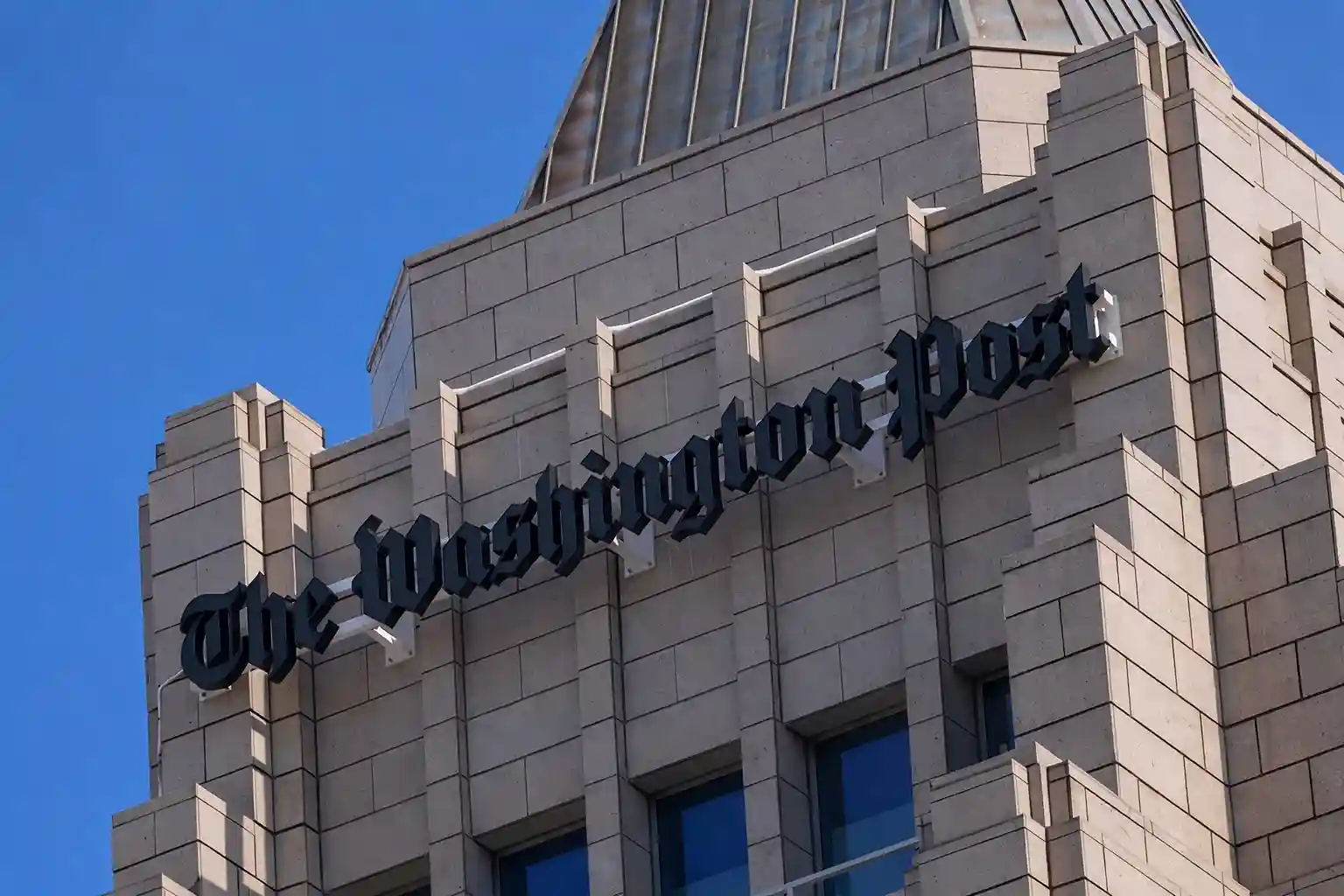
The Washington Post recently made a shocking announcement that has the entire journalism world buzzing: they let go of about a third of their staff on Wednesday. We're talking about hundreds of people losing their jobs all at once, with whole sections like the sports desk, parts of foreign bureaus, and the popular books coverage being wiped out. This isn't just numbers on a spreadsheet; it's a gut punch to the Washington Post, one of the most well-known names in American journalism. The newspaper that broke the Watergate scandal and became known for its bold reporting.
Matt Murray, the Executive Editor, told everyone over Zoom that morning that the news was "painful but necessary." He told the team that they needed to focus on the most important things, like politics, national security, and big investigative stories, because they couldn't cover everything anymore. "We can't be everything to everyone," he said in his message.
He said that they had been publishing a lot fewer stories every day for the past five years, that readers' habits were changing, and that technology was changing. He said that the way the publication was built up was stuck in the past, especially when it came to video, where they haven't kept up. Murray said that this "strategic reset" will make the Post stronger, and they might even break even by the end of the year.
But let's be honest: everyone was shocked by the scale. There had been talk about it for weeks. People saw that sports writers weren't going to Italy for the Winter Olympics as they had planned. There had been talk of buyouts and small layoffs before, but when the emails came in with the cold subject lines "Your role is eliminated" or "Your role is not eliminated," it hit like a freight train.
The departments were hit hard: sports were completely cut, the books section was closed (a Sunday staple for reviews and author discussions), the metro desk was cut back a lot for coverage in the DC area, and operations overseas were cut back a lot.
The international part is the hardest. Claire Parker, the head of the Cairo Bureau, said on X that she was leaving, along with the rest of the Middle East team, including editors and correspondents. She thanked her coworkers for being strong and said, "It's hard to understand the logic."
People from Ukraine, China, South Asia, and even investigations from other countries all took part. Another reporter who had just filed from a cold, powerless war zone in Ukraine was also let go. It's hard to understand why you would want to hide from the world when there are always big news stories going on.
The answer came quickly and strongly. Martin Baron, the former executive editor of the paper who ran it during its best years under Bezos, didn't hold back. He called it "near-instant, self-inflicted brand destruction" and held Bezos responsible for decisions like taking away the Kamala Harris endorsement in 2024 and moving the opinion sections to the right.
Baron also said that hundreds of thousands of loyal fans left because they felt lied to by what he called "moral infirmity" and "sickening" attempts to get close to Trump. He remembered how Bezos stood up to Trump in the first term and defended a free press. But what about now? Baron said, "There is no sign of it."
Nancy Pelosi, a former Speaker of the House, also spoke out, saying that this is part of a "reprehensible pattern" where corporate decisions are ruining newsrooms all over the country. She told the Washington Press Club Foundation that a weak press hurts democracy. "A free press can't do its job if it doesn't have the money it needs to live."
Journalists from both sides begged Bezos to get involved. He didn't say anything, even though he is worth billions through Amazon. He didn't say anything until things calmed down. The Post doesn't say how many people subscribe, but estimates say there are about 2 million, which is down from the highest numbers. Part of the reason for this is that editorial choices turned off core readers.
Over the past ten years, The New York Times has been on a roll, tripling its staff by focusing on games, podcasts, Wirecutter recommendations, and smart digital changes. The Times bought The Athletic to cover sports instead of making its own section for sports. The Post? It's going the other way, taking away what made it special.
Think about the past here. Woodward and Bernstein wrote about Watergate for this newspaper, which led to the president's death. Ben Bradlee's Style section was the best example of how to write features. John Feinstein, Michael Wilbon, Sally Jenkins, and Tony Kornheiser were famous sports figures who changed how we talk about games and culture. Literary people went to Books World every Sunday.
It's not just cuts that make it less deep; it's also taking away parts of what made the Post so important.
People got mad quickly in both professional and social media conversations. Ashley Parker, a former Post writer who now writes for The Atlantic, wrote a blunt column saying that the daily has gone from being a local family rag to a national powerhouse and pillar of democracy. But if the leaders keep going this way, it might not last. She was one of many who had left in the last few months because they knew the storm was coming.
The Atlanta Journal-Constitution also said on the same day that it would cut 50 jobs, or 15% of its staff, half of which were in the newsroom. This came after the paper went all-digital last year. Newsrooms are getting smaller, local coverage is getting thinner, and international desks are closing as costs rise and ad money leaves.
Murray tried to put a positive spin on it by talking about power, uniqueness, and influence. He said that the Post has kept up its strong coverage of federal workforce issues since the Trump administration. Some people think that's just for show, though.
If the publication doesn't have enough money for good local, sports, books, and global reporting, it might not be as important or as wide-ranging.
People who worked there called it a "bloodbath," "devastating," and "the darkest day in memory." A worker who didn't want to be named told reporters that it felt like the place they had put their lives into was being torn down. Representatives from the Guild union said that hundreds of people in the newsroom were affected.
What's next? The Post says it will focus on politics, national issues, and security—areas where they have an edge. But what about stepping back from culture, the world, and everyday life in DC and other places? That might make readers even angrier. Subscriptions might drop even more if readers think the magazine is losing its spirit.
It's not just about one store. It's a sign of bigger problems in the media, like falling print revenue, competition from digital media, and owners putting profits ahead of journalism. Bezos has made Amazon a huge business, but he hasn't brought the same creativity or patience to the Post. His silence in the face of appeals says a lot.
For anyone who grew up reading the Post or relied on its news to understand the world, Wednesday felt like losing a piece of history. The brand is famous for a reason: Watergate, deep dives, and never backing down from its responsibilities. You could turn that legacy into a memory if you gut it like this.
After these cuts, what happens next will decide if it comes back or fades even more. People are upset and sad right now, and they are wondering if the publication can still live up to its motto, "Democracy Dies in Darkness."
Previous article
Europe Pushes for Digital Sovereignty Away from Big Tech Giants
Jennifer Chen
Jennifer Chen is a senior business correspondent covering Wall Street, corporate America, and economic trends. A former financial analyst, she brings insider expertise to stories about markets, mergers, startups, and the intersection of business and technology.